“The ship is – and has always been – the largest human construction capable of casting off and moving across the globe”
Peter Quartermaine and Bruce Peter, Cruise.
A relatively modern adaptation to the ancient practice of sailing is the emergence of the cruise ship industry. In 2017, there were 27 million cruise passengers, which is a number that is continuing to rise. The contemporary cruise ship sector was born in the 19th century, with the Black Ball Line becoming the first shipping company to offer regular services between London and New York, with the primary focus being the comfort of passengers. By the 1860s, the conditions aboard these vessels had improved significantly, facilitating the rise of the ‘fun’ cruise ships that developed in the 1960s which focused on the entertainment and activities offered aboard the ship.
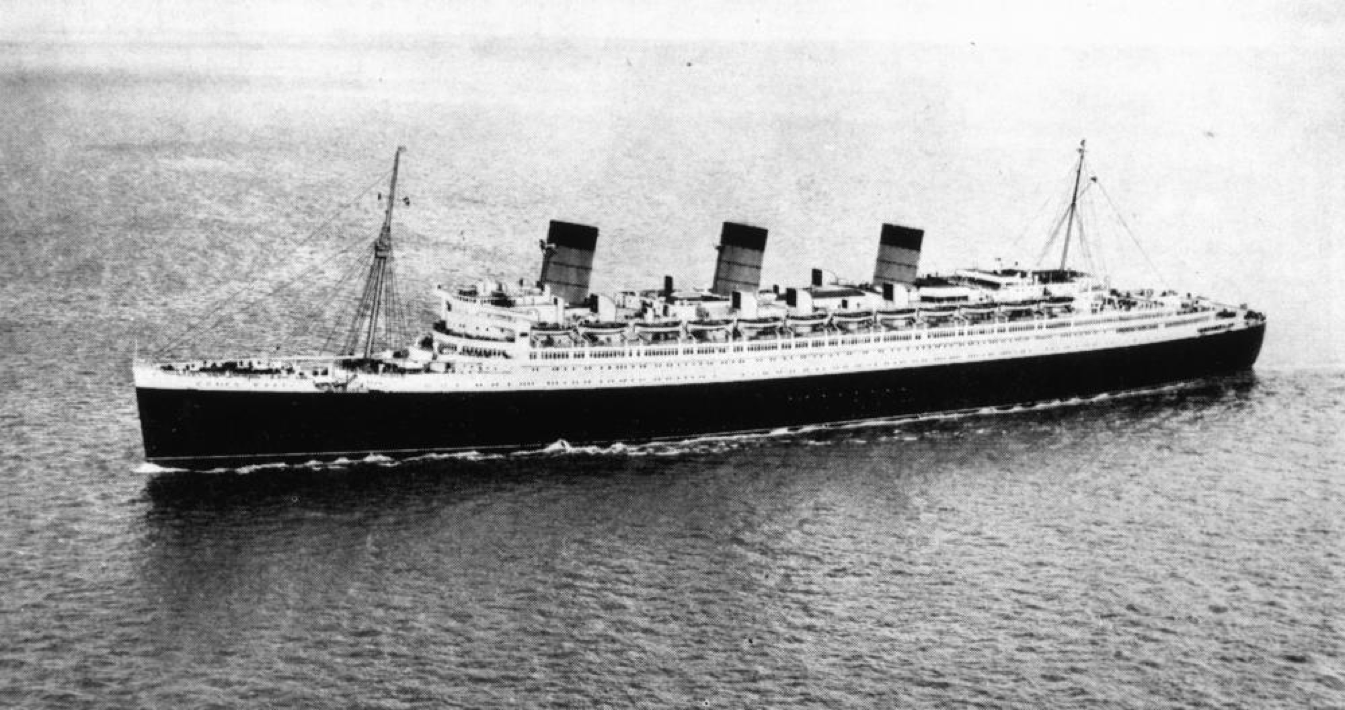
An image of the RMS Queen Mary, a typical ocean liner from the early-to-mid 20th century, can be found here.
Although cruise ships generally focus on visiting a variety of destinations it is still important to consider the agency and impact the sea has on these holidays. Unlike other types of the holidays, cruises are unique as they are in almost constant movement. This brings passengers closer to the sea forcing them to adapt to the ubiquitous swaying and rocking, which frequently causes seasickness. For others, once they become acclimatised to the movement, their bodies and the sea develop a relationship. With the rhythm of the sea even helping passengers to fall asleep and many suffering from land-sickness when they return home. As well as bringing passengers closer to the sea, cruise ships, use a specific type of nostalgia to market their holidays. This reinforces the popular imagination of ships from the past. Examples of this include using children in adverts who are equipped with traditional maritime objects such as sailor’s hats or telescopes, emphasising notions of adventure that are strongly associated with a life at sea. This presents ideas of trying to commodify the geographies of the sea in order to generate a profit.
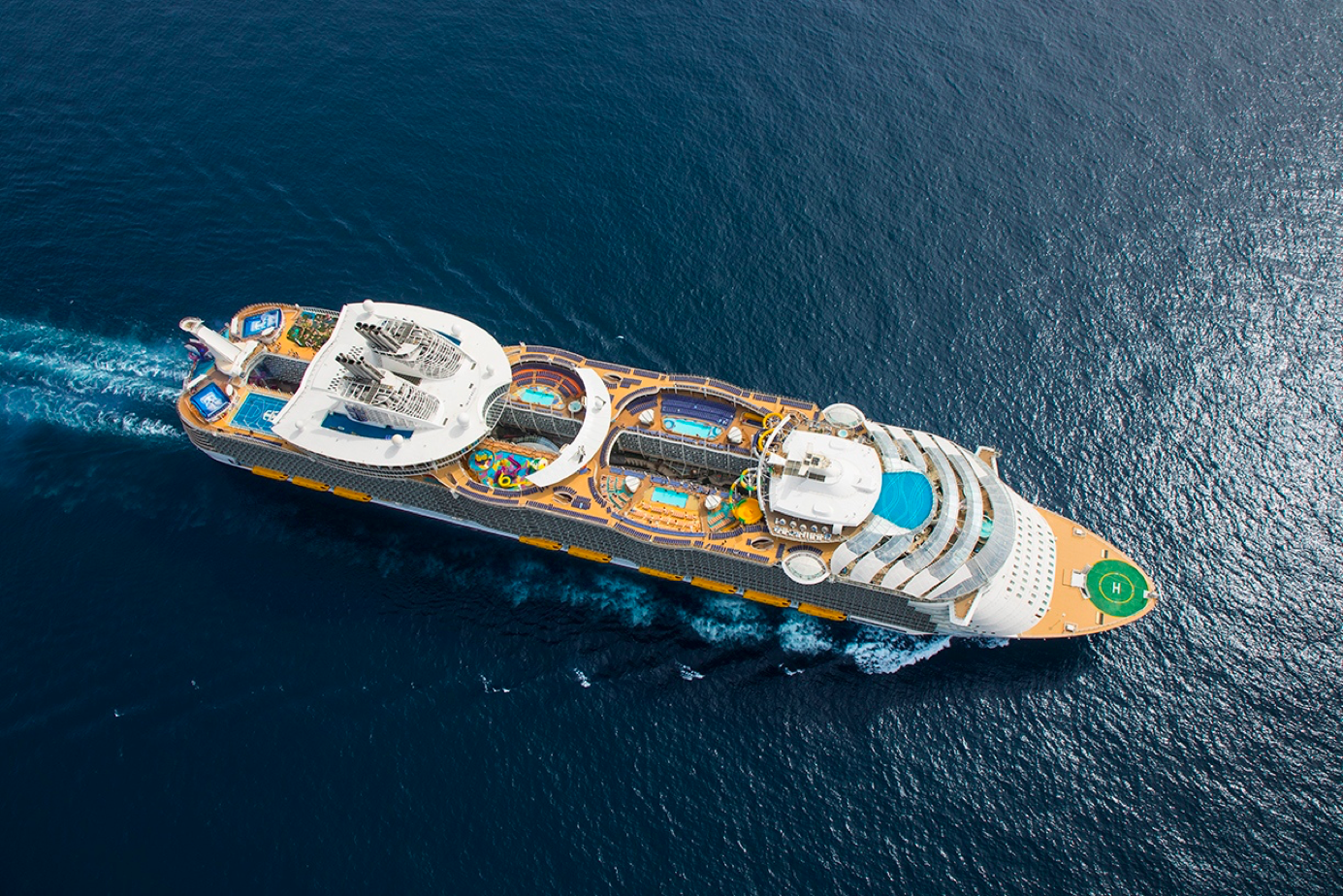
An image of the Symphony of the Sea, the largest cruise ship in the world, can be found here.
Not dissimilar to numerous sea-based practices, cruise ships often have a negative impact on the marine environment. Figures suggest that an individual cruise ships cause the same amount of pollution as 1 million cars in a single day, which is due to the heavy fuel used to power such ships. As well as this, they are infamous for dumping waste into the sea, with 1 billion gallons of waste dumped annually. Such practices change the conditions of the sea by causing an imbalance in the nitrogen cycle. Which hinders the development of plants and animals, and has a negative effect within food chain, forcing native species to adapt or relocate in order to survive. There have been some strides made to make the cruise ship industry greener, but overall, their impact on the sea is often harmful. With such ships being understood as destroying the environment that they are trying to bring their passengers closer to.
WORD COUNT: 480
Bibliography
Cruise Passenger. (no date) ‘A brief history of cruising’, Cruise Passenger [Online]. Available at: https://cruisepassenger.com.au/a-brief-history-of-cruising/# (Accessed: 27th February 2019).
Grace, M.L. (2008) ‘A brief history of the cruise ship industry’, Cruising the Past, 17th June [Online]. Available at: https://www.cruiselinehistory.com/a-brief-history-of-the-cruise-ship-industry/ (Accessed: 27th February 2019).
Guilford, G. (2014) ‘Cruise ships dump 1 billion gallons of sewage into the ocean every year’, Quartz, 9th December [Online]. Available at: https://qz.com/308970/cruise-ships-dump-1-billion-tons-of-sewage-into-the-ocean-every-year/ (Accessed: 27th February 2019).
Howarth, R.W. (2008) ‘Coastal nitrogen pollution: a review of sources and trends globally and regionally’, Harmful algae, 8(1), pp. 14-20.
Iglu Cruise. (no date) ‘200 years of cruise history’, Iglu Cruise [Online]. Available at: https://www.iglucruise.com/200-years-of-cruise-history (Accessed: 27th February 2019).
Leadbeater, C. (2018) ‘Why a cruise could hold the key to better sleep’, The Telegraph, 26th October [Online]. Available at: https://www.telegraph.co.uk/travel/cruises/articles/why-a-cruise-could-be-the-secret-to-a-full-eight-hours-according-to-a-sleep-doctor/ (Accessed: 27th February 2019).
Machan, T. (2015) ‘What causes seasickness on a cruise and how can you cure it?’, The Telegraph, 19th May [Online]. Available at: https://www.telegraph.co.uk/travel/cruises-/news/Cruise-What-causes-seasickness-and-how-can-you-cure-it/ (Accessed: 27th February 2019).
McMaster, A. (2017) ‘Even ‘Green’ Cruise Ships Are Polluting the Earth at Incredible Rates’, Global Citizen, 6th September [Online]. Available at: https://www.globalcitizen.org-/en/content/cruise-ships-polluters-ocean-sewage-particulates/ (Accessed: 27th February 2019).
Micallef, J.V. (2018) ‘The Cruise Industry’s Boom is Primed to Continue’, Forbes, 1st September [Online]. Available at: https://www.forbes.com/sites/joemicallef/2018/09/01/the-cruise-industrys-boom-is-primed-to-continue/#2ae881762d89 (Accessed: 27th February 2019).
Princess Cruises. (2018) ‘Change I Princess Cruises Short Film Commercial’, Princess Cruises, 5th January [Video]. Available at: https://www.youtube.com-/watch?v=jwkUX5BdhD4 (Accessed: 27th February 2019).
Quartermaine, P. and Peter, B. (2006) Cruise: Identity, design and culture. London: Laurence King Publishing.
Rideout, A. (2018) ‘How to Cure Vertigo After a Cruise Ship Vacation’, USA Today, 14th May [Online]. Available at: https://traveltips.usatoday.com/cure-vertigo-after-cruise-ship-vacation-9958.html (Accessed: 27th February 2019).
Vitousek, P.M. Aber, J.D. Howarth, R.W. Likens, G.E. Matson, P.A. Schindler, D.W. Schlesinger, W.H. and Tilman, D.G. (1997) ‘Human alteration of the global nitrogen cycle: sources and consequences’, Ecological applications, 7(3), pp. 737-750.
 An Odyssey of the Sea 1913572